
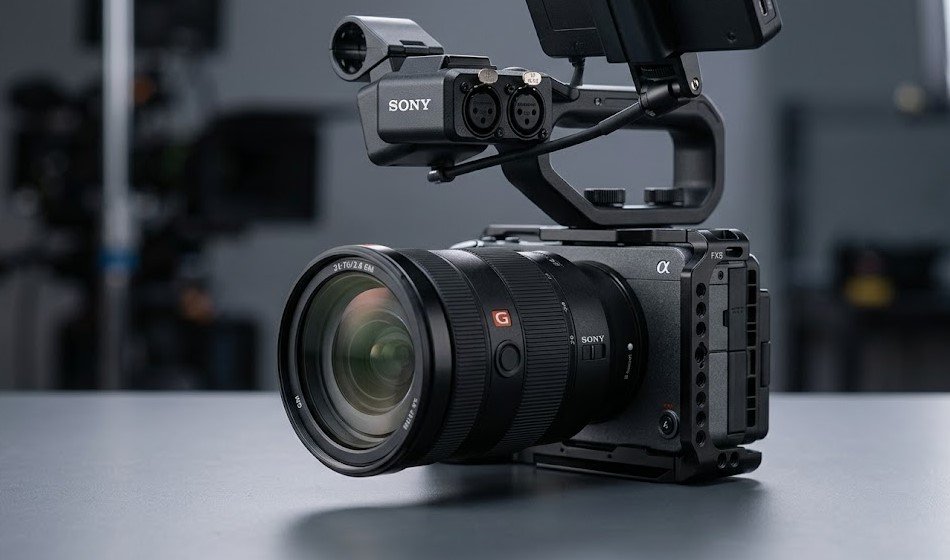
The sony fx3 is designed with a clear philosophy: deliver cinema-grade performance in the most compact and practical form possible. Unlike traditional bulky cinema cameras, Sony engineered the FX3 to be lightweight, modular, and highly adaptable for real-world production environments. This makes it especially appealing to solo filmmakers, documentary creators, and content professionals who need mobility without compromising on quality. Its box-style design removes unnecessary DSLR elements like an electronic viewfinder and instead focuses entirely on video-first functionality.
Another important aspect of the design is its flexibility in rigging and mounting. The body includes multiple 1/4-inch threaded mounting points, allowing users to attach accessories such as handles, microphones, monitors, or cages without needing extra modifications. Despite its small size, the camera includes a built-in cooling fan, which ensures long recording sessions without overheating something that is critical for professional shoots. This thoughtful engineering shows that the FX3 is not just a compact camera, but a purpose-built cinema tool designed for demanding production workflows.
Full-Frame Sensor Performance and Image Quality
The sony fx3 is powered by a 12.1MP full-frame Exmor R CMOS sensor, which is specifically optimized for video rather than high-resolution still photography. This lower megapixel count is actually a strength in cinematic production, as it allows the camera to capture larger pixels, resulting in better light sensitivity, reduced noise, and improved dynamic range. Combined with Sony’s BIONZ XR processor, the FX3 delivers highly detailed and clean footage that meets professional filmmaking standards.
In real-world usage, the FX3 produces rich cinematic visuals with excellent color depth and natural skin tones. It supports 10-bit 4:2:2 internal recording, which provides filmmakers with more flexibility during color grading and post-production. The full-frame sensor also enhances depth of field control, allowing users to achieve that classic “cinematic blur” in backgrounds. This combination of sensor performance and image processing makes the FX3 a powerful tool for storytelling, commercial work, and high-end video production.
Advanced Video Capabilities for Professional Filmmakers
The sony fx3 is built with a strong focus on professional video production, offering a wide range of advanced recording features that cater to filmmakers, content creators, and studio environments. One of its standout capabilities is 4K video recording at up to 120 frames per second, which allows creators to produce smooth, high-quality slow-motion footage without losing detail. This makes it especially useful for cinematic storytelling, action sequences, and creative visual effects.
Beyond resolution and frame rates, the FX3 also includes powerful recording formats such as S-Log3 and HLG, which are widely used in professional color grading workflows. These profiles give filmmakers greater control over dynamic range, allowing them to preserve highlights and shadows for more detailed post-production editing. Additionally, the camera supports 10-bit 4:2:2 internal recording, ensuring accurate color reproduction and flexibility when working in demanding production pipelines.
Another major advantage is the support for 16-bit RAW output through HDMI when paired with an external recorder. This feature is typically found in higher-end cinema cameras and provides maximum data flexibility for professional editing and color grading. Overall, these advanced video capabilities position the FX3 as a serious cinema tool rather than just a hybrid camera.
Low-Light Performance and Real-World Shooting Advantage
The sony fx3 is widely recognized for its exceptional low-light performance, making it one of the strongest compact cinema cameras in challenging lighting conditions. Thanks to its full-frame sensor and dual base ISO technology, the FX3 can produce clean and usable footage even in environments with very limited lighting. This makes it a preferred choice for documentary filmmakers, event shooters, and nighttime cinematography where artificial lighting is minimal or unavailable.
In practical shooting scenarios, the FX3 maintains impressive detail and color accuracy even at high ISO levels. Noise is well-controlled compared to many cameras in its class, which allows filmmakers to push exposure settings without heavily degrading image quality. The camera’s wide ISO range also provides flexibility when working in unpredictable lighting environments, such as weddings, street filming, or indoor shoots.
Another real-world advantage is the combination of low-light capability with Sony’s S-Cinetone color profile, which produces natural skin tones and cinematic contrast straight out of the camera. This reduces the need for heavy post-processing and helps creators deliver professional-looking results quickly. Overall, the FX3’s low-light performance significantly expands creative possibilities and makes it highly reliable for real-world filmmaking.
Audio, Connectivity, and Professional Workflow Integration
The sony fx3 is not only focused on video quality but also designed to fit seamlessly into professional production workflows, especially when it comes to audio and connectivity. One of its key strengths is the inclusion of a detachable XLR handle unit, which provides professional-grade audio inputs. This allows filmmakers to record high-quality sound directly into the camera using XLR microphones, eliminating the need for external audio recorders in many setups.
In addition to audio capabilities, the FX3 offers a wide range of connectivity options that make it suitable for modern production environments. It includes HDMI output for external recording, USB-C for fast data transfer and live streaming, and multiple accessory ports for monitoring and rigging. These features allow creators to integrate the camera into both studio and field workflows without complications.
Another important aspect is its support for real-time streaming and remote control, which is increasingly important for digital content creators and production teams. The FX3 can be used for live broadcasting, virtual production setups, and remote shooting environments. Combined with Sony’s ecosystem of software tools, it ensures smooth integration from shooting to editing to delivery, making it a complete professional workflow solution.
Sony FX3 vs Other Cinema Cameras (FX30 & FX6 Comparison)
The sony fx3 sits in a unique position within Sony’s Cinema Line, acting as a bridge between entry-level and high-end cinema cameras. When compared to the Sony FX30, the FX3 clearly offers a full-frame sensor advantage, which results in better low-light performance, shallower depth of field, and improved dynamic range. The FX30, while excellent for its price, uses an APS-C sensor, making it more suitable for beginners or budget-conscious creators.
On the other hand, when compared to the Sony FX6, the FX3 is more compact and portable, but the FX6 delivers more advanced professional features such as built-in ND filters and a more robust broadcast-ready design. The FX6 is often preferred for large-scale productions, while the FX3 is ideal for solo shooters and small crews who need mobility without sacrificing cinema quality.
Overall, the FX3 stands in the middle of Sony’s lineup, offering a balance between portability, performance, and professional capability. It is often described as the “sweet spot” camera for filmmakers who want cinema-grade output in a compact body without moving into the heavier and more expensive cinema systems.
Real-World Use Cases
The sony fx3 is widely used across different creative industries because it adapts well to both small-scale and professional production environments. For YouTubers and independent content creators, it offers a major upgrade in video quality without requiring a large or complex setup. Its compact size, excellent autofocus, and cinematic image output make it ideal for talking-head videos, travel vlogs, and high-end YouTube productions where visual quality plays a key role in audience engagement.
For filmmakers and documentary creators, the FX3 becomes a reliable field camera due to its portability and strong low-light performance. It is often used in weddings, short films, interviews, and documentary shooting where mobility and quick setup are essential. The ability to shoot long recordings without overheating also makes it practical for real-world production environments where continuous capture is required.
In studio and commercial settings, the FX3 is frequently used as a secondary or even primary camera in multi-camera setups. Production teams appreciate its ability to integrate easily with external monitors, recorders, and lighting systems. Its consistent color science and professional codecs allow it to match well with higher-end cinema cameras, making it a valuable tool in both independent and professional studios.
Final Verdict
The sony fx3 continues to hold strong value in 2026, especially for filmmakers who prioritize portability without sacrificing professional cinema quality. Even though newer cameras have entered the market, the FX3 remains relevant due to its balanced combination of full-frame image quality, advanced video features, and reliable real-world performance. It is not just a camera built for specs—it is built for actual production workflows where consistency and efficiency matter.
For solo creators, YouTubers, and documentary filmmakers, the FX3 is still one of the most practical choices available. Its strong low-light capability, 4K 120fps recording, and cinematic color science make it suitable for a wide range of content styles. At the same time, its compact design allows creators to move quickly, shoot in tight environments, and travel without heavy equipment limitations.
However, for large-scale cinema productions, higher-end options like the FX6 or FX9 may still be more suitable due to their advanced broadcast features. But for most modern creators who want a “do-it-all” cinema camera in a small body, the FX3 remains a highly competitive and future-proof investment.
Overall, the FX3 is still worth it in 2026 because it strikes the right balance between professional quality, portability, and workflow efficiency—making it one of Sony’s most successful cinema tools to date.
Conclusion
The sony fx3 stands out as a compact yet powerful cinema camera designed for modern filmmaking needs. It delivers full-frame cinematic quality, strong low-light performance, and advanced video features in a highly portable body. Whether used for YouTube content, documentaries, or professional productions, it consistently proves itself as a reliable and flexible tool for creators. Even in 2026, it remains one of the most balanced options in Sony’s Cinema Line for those who want professional results without heavy equipment complexity.
FAQs
1. Is the Sony FX3 good for beginners?
Yes, but it is more suited for serious beginners or creators who already understand video production basics.
2. Can the Sony FX3 shoot 4K 120fps?
Yes, it supports 4K recording at up to 120fps for high-quality slow-motion footage.
3. Is the Sony FX3 better than the FX30?
Yes, in terms of image quality and low-light performance because the FX3 has a full-frame sensor.
4. Is the Sony FX3 still worth buying in 2026?
Yes, it remains a strong choice due to its balanced performance, portability, and professional features.
For More Update Stay Tunned with Gonzay
 Admin
Admin