
In today’s fast-moving digital world, managing work efficiently has become more important than ever. Teams handle multiple projects, deadlines, and communication channels at the same time, which can easily lead to confusion and missed tasks. This is where what is Asana becomes an important question for professionals and businesses looking to improve productivity and organization.
Asana is a popular project management and work management tool designed to help individuals and teams organize, track, and manage their daily tasks and long-term projects in one centralized platform. Instead of relying on emails, spreadsheets, or scattered communication, Asana brings everything into a structured system where everyone knows what needs to be done, who is responsible, and when it is due. It helps reduce confusion and makes teamwork more transparent and efficient.
At its core, Asana works like a digital workspace where tasks are created, assigned, and tracked in real time. Whether it’s a small startup or a large enterprise, Asana allows teams to break down complex projects into simple actionable steps. This improves coordination, reduces misunderstandings, and helps teams stay aligned on goals from start to finish.
The Purpose of Asana in Modern Work Management
The main purpose of Asana is to simplify how teams plan, organize, and complete work in a structured and efficient way. In many workplaces, tasks are often scattered across emails, chats, spreadsheets, and meetings, which leads to confusion and delays. This is where what is Asana becomes important, as it introduces a centralized system where all work is clearly visible and manageable in one place.
Asana is designed to improve productivity by helping teams focus on actual work instead of spending time tracking updates or searching for information. It allows users to create clear task lists, assign responsibilities, set deadlines, and monitor progress in real time. This ensures that everyone knows what they need to do and when it needs to be completed, reducing miscommunication and missed deadlines.
Another key purpose of Asana is to enhance collaboration among team members, especially in remote or hybrid work environments. It provides a shared workspace where updates, files, and feedback can be added directly to tasks. This creates transparency and keeps everyone aligned on project goals, making teamwork more efficient and organized.
Key Features That Make Asana Powerful
Asana offers a wide range of features that make it one of the most effective project management tools for teams of all sizes. When people search for what is Asana, they are often trying to understand what makes it different from simple to-do lists or basic task apps. The answer lies in its powerful combination of organization, collaboration, and automation features that work together in one platform.
One of the most important features of Asana is task management. Users can create tasks, break them into subtasks, assign them to team members, and set clear deadlines. Each task can include descriptions, attachments, comments, and priority levels, making it easier to manage complex work without confusion. This structured approach helps teams stay organized and ensures nothing gets overlooked during a project.
Another powerful feature is project visualization. Asana allows users to view work in multiple formats such as lists, boards, calendars, and timelines. This flexibility helps different teams work in the way that suits them best. For example, marketing teams may prefer board views for campaigns, while managers may use timelines to track project deadlines and dependencies. Along with this, Asana also includes automation tools that reduce repetitive work by automatically assigning tasks or updating statuses based on set rules, saving both time and effort.
How Asana Works: Tasks, Projects, and Workflows
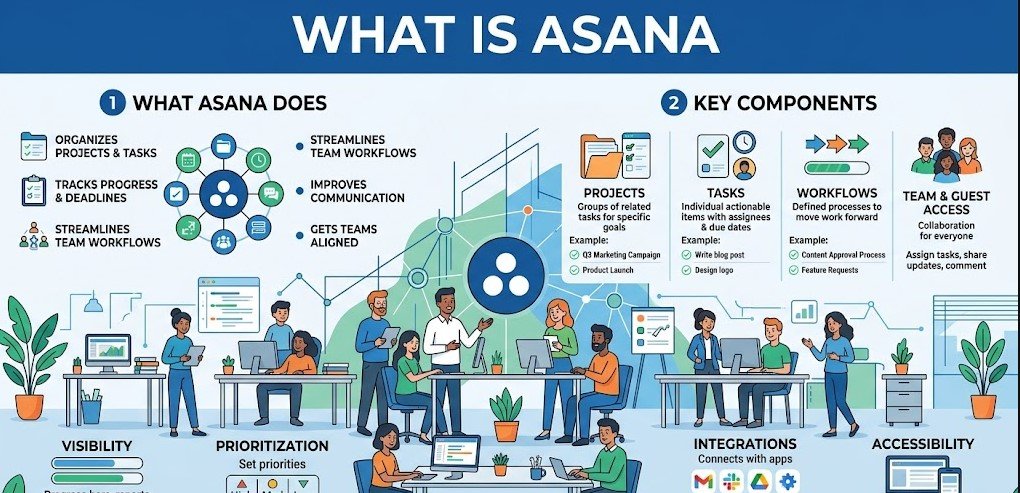
Asana works by organizing all work into three core elements: tasks, projects, and workflows. Understanding these elements is essential when learning what is Asana, because they form the foundation of how the platform operates. Instead of handling work in a scattered way, Asana structures everything into a clear system that teams can easily follow and manage.
Tasks are the smallest unit of work in Asana. Each task represents a specific action that needs to be completed, such as writing a report, designing a graphic, or reviewing a document. These tasks can include descriptions, deadlines, attachments, and assigned team members. By breaking down large projects into smaller tasks, Asana makes complex work more manageable and easier to track.
Projects are collections of related tasks that work toward a common goal. For example, a product launch project may include tasks for marketing, design, development, and testing. Within each project, users can choose different layouts like lists or boards to organize tasks visually. This helps teams stay focused on overall goals while keeping every detail under control.
Workflows in Asana refer to the structured process that tasks follow from start to completion. Teams can set rules, dependencies, and automation so that work moves smoothly between stages without constant manual updates. This ensures that every step of a project is completed in the right order, improving efficiency and reducing delays in team collaboration.
Benefits of Using Asana for Teams and Businesses
Asana provides several practical benefits that make it a valuable tool for teams, businesses, and even individuals managing complex work. When understanding what is Asana, it is important to look at how it improves productivity, communication, and overall work efficiency in real-world environments.
One of the biggest benefits of Asana is improved organization. Instead of relying on scattered emails or multiple apps, all tasks, deadlines, and project updates are stored in one centralized system. This helps teams stay focused and reduces the chances of missing important work. It also creates a clear structure where everyone knows what is happening at every stage of a project.
Another major advantage is better collaboration. Asana allows team members to communicate directly within tasks, share files, and provide updates in real time. This reduces the need for constant meetings and back-and-forth messages, making teamwork faster and more efficient. It also ensures that everyone has access to the latest information, which improves transparency across the team.
Finally, Asana increases productivity by saving time through automation and clear workflows. Tasks can be automatically assigned, updated, or moved based on set rules, which reduces manual effort. This allows teams to focus more on important work instead of repetitive administrative tasks, leading to faster project completion and better overall results.
Real-World Use Cases of Asana
Asana is widely used across different industries because it adapts easily to various types of work. When exploring what is Asana, it becomes clear that its real strength lies in how flexible it is for different teams, whether they are working in marketing, technology, education, or business operations.
In marketing teams, Asana is often used to manage campaigns, content calendars, and social media planning. Teams can create tasks for each stage of a campaign, assign responsibilities to designers and writers, and track deadlines to ensure everything is published on time. This helps marketing teams stay organized and maintain consistency across multiple platforms.
In software development and IT teams, Asana is used to manage product development cycles, bug tracking, and sprint planning. Developers can break large projects into smaller technical tasks, monitor progress, and coordinate with designers and testers in one place. This improves communication and ensures smoother product releases without confusion or delays.
In business operations and HR departments, Asana helps manage recruitment processes, employee onboarding, and internal workflows. For example, HR teams can create structured onboarding tasks for new employees, ensuring they complete training, documentation, and setup steps efficiently. This makes internal processes more streamlined and reduces manual workload for managers.
Asana Pricing and Accessibility Overview
Asana offers a flexible pricing structure that makes it suitable for individuals, small teams, and large organizations. When understanding what is Asana, it is important to know that it provides both free and paid plans, allowing users to choose according to their needs and budget.
The free plan is ideal for individuals or small teams who want to manage basic tasks and projects. It includes essential features like task creation, project views, and basic collaboration tools. This makes it a good starting point for users who are new to project management and want to organize their work without any cost.
For growing teams and businesses, Asana offers premium and business plans with advanced features. These include timelines, workflow automation, reporting tools, and workload management. These features are designed to help teams handle more complex projects and improve productivity at a larger scale. Higher-tier plans also provide better control, security, and integration options with other tools.
In terms of accessibility, Asana is available as a web platform and also offers mobile apps for both Android and iOS. This ensures that users can manage their tasks and projects from anywhere, whether they are working in the office, at home, or on the go.
Is Asana Right for You? Final Thoughts
Choosing the right project management tool depends on how your team works, the size of your projects, and how much organization you need. When people ask what is Asana, they are often also trying to decide whether it is the right solution for their workflow. Asana is especially useful for teams that struggle with managing multiple tasks, missed deadlines, or unclear communication.
Asana is a strong choice for teams that need structure and visibility in their work. It works best for businesses that handle ongoing projects, collaborate frequently, or manage complex workflows. If your work involves multiple people contributing to different parts of a project, Asana helps keep everything aligned and easy to track. However, for very simple personal task lists, it may feel more advanced than necessary.
Ultimately, Asana is not just a task manager—it is a complete work management system designed to improve productivity and teamwork. It brings clarity, reduces confusion, and helps teams stay focused on goals rather than scattered communication. If used properly, it can significantly improve how efficiently work gets done across any organization.
Conclusion
Asana is a powerful project and work management tool designed to help individuals and teams organize tasks, manage projects, and improve collaboration in a structured way. Throughout this article, we explored what is Asana, how it works, and why it has become an essential platform for modern teams. Its ability to centralize tasks, improve communication, and streamline workflows makes it a valuable solution for businesses of all sizes. By reducing confusion and improving visibility, Asana helps teams focus more on actual work rather than managing scattered information.
In conclusion, Asana stands out as more than just a task management app—it is a complete productivity system. Whether you are managing a small project or running complex operations, it provides the tools needed to stay organized, meet deadlines, and improve teamwork efficiency.
FAQs
1. What is Asana used for?
Asana is used for managing tasks, organizing projects, and improving team collaboration in one platform.
2. Is Asana free to use?
Yes, Asana offers a free plan with basic features, along with paid plans for advanced tools and larger teams.
3. Can individuals use Asana?
Yes, individuals can use Asana to manage personal tasks and improve daily productivity.
4. Is Asana good for remote teams?
Yes, Asana is highly effective for remote teams because it provides real-time updates, shared workspaces, and clear task tracking.
For More Update Stay Tunned with Gonzay