
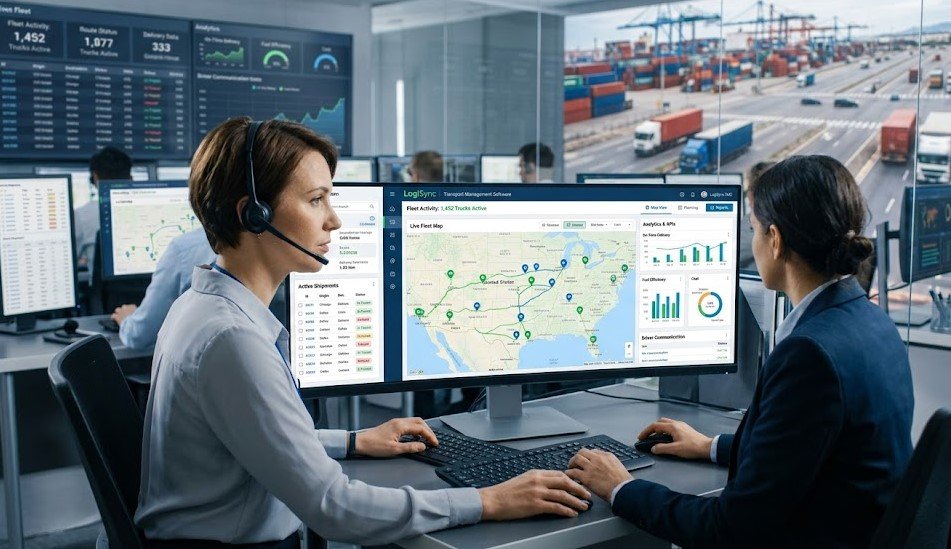
Transport management software (TMS) is a digital logistics system designed to help businesses plan, execute, and optimize the movement of goods across different transport modes such as road, air, rail, and sea. It works as a centralized platform that connects all transportation activities, making logistics operations more organized and efficient. Instead of handling shipments manually, companies can use TMS to automate key processes like scheduling deliveries, selecting carriers, and tracking shipments in real time.
This system is widely used in modern supply chains because it improves coordination between suppliers, warehouses, and customers. It also reduces human errors and helps businesses manage complex transportation networks with greater accuracy. In simple terms, transport management software acts as the “brain” of logistics operations, ensuring that goods reach the right place at the right time while minimizing costs and delays.
Why Businesses Need Transport Management Software
Businesses today operate in a highly competitive and fast-moving environment where customer expectations for quick and accurate deliveries are constantly increasing. Traditional manual logistics processes are no longer sufficient to handle large-scale transportation operations efficiently. This is why transport management software has become essential for modern supply chains.
One of the main reasons companies adopt TMS is to solve common logistics challenges such as delayed shipments, inefficient route planning, and lack of visibility in transportation processes. Without proper systems in place, businesses often struggle with rising fuel costs, poor coordination between departments, and inaccurate delivery schedules. TMS helps eliminate these issues by automating workflows and improving communication across the entire supply chain.
Another important reason is decision-making. With real-time data and analytics, businesses can monitor performance, identify inefficiencies, and make smarter logistics decisions. This leads to better resource utilization, improved customer satisfaction, and stronger operational control. In short, transport management software is not just a tool—it is a necessity for businesses that want to stay competitive in today’s global market.
Key Features of Modern Transport Management Software
Modern transport management software comes with advanced features designed to simplify logistics operations and improve overall efficiency. One of the most important features is shipment planning and execution, which allows businesses to automate the entire process of scheduling deliveries, assigning carriers, and managing freight bookings. This reduces manual workload and ensures that shipments are handled more accurately and on time.
Another key feature is route optimization. TMS uses intelligent algorithms to determine the most efficient delivery routes based on distance, traffic conditions, fuel costs, and delivery deadlines. This not only saves time but also significantly reduces transportation expenses. Real-time tracking is also a critical feature, enabling companies to monitor the exact location of shipments at any stage of the journey, which improves transparency and customer communication.
Freight audit and billing automation is another powerful capability of modern TMS platforms. It helps verify shipping invoices, detect errors, and prevent overcharging, ensuring financial accuracy. Together, these features make transport management software a complete solution for managing complex logistics operations efficiently and reliably.
Benefits for Supply Chain and Logistics Operations
The use of transport management software delivers significant improvements in supply chain and logistics performance. One of the most important benefits is cost efficiency. By optimizing routes, selecting the most suitable carriers, and reducing fuel consumption, businesses can significantly lower their overall transportation expenses. This makes logistics operations more economical and sustainable in the long run.
Another major benefit is improved delivery performance. With automated planning and real-time tracking, companies can ensure faster and more accurate deliveries. This not only enhances operational efficiency but also increases customer satisfaction, which is crucial in today’s competitive market. Customers now expect timely updates and reliable delivery services, and TMS helps businesses meet those expectations consistently.
Additionally, transport management software improves decision-making through data-driven insights. Businesses can analyze shipping patterns, identify inefficiencies, and adjust strategies accordingly. It also provides end-to-end visibility across the supply chain, allowing managers to monitor goods from dispatch to final delivery. Overall, TMS strengthens logistics operations by making them more transparent, efficient, and reliable.
Real-World Use Cases and Industry Applications
Transport management software is widely used across multiple industries because of its flexibility and ability to handle complex logistics operations. In the manufacturing sector, companies rely on TMS to manage the movement of raw materials to production facilities and ensure timely delivery of finished products to distributors. This helps maintain smooth production cycles and reduces the risk of delays in the supply chain.
In the e-commerce industry, TMS plays an even more critical role. Online businesses depend on fast and accurate deliveries to meet customer expectations. Transport management software helps e-commerce companies track orders in real time, manage multiple delivery partners, and ensure efficient last-mile delivery. This improves customer experience and strengthens brand reliability in a highly competitive market.
Logistics service providers and third-party logistics (3PL) companies also heavily depend on TMS platforms. Since they handle transportation for multiple clients, they need a centralized system to manage different shipments efficiently. Retail chains use it as well to distribute goods across multiple store locations while maintaining inventory balance. These real-world applications show how essential TMS has become for modern industries that rely on efficient transportation systems.
Challenges and Limitations
While transport management software offers many advantages, its implementation is not without challenges. One of the most common issues is the high initial cost. Advanced TMS platforms, especially those designed for large enterprises, often require significant investment in software, infrastructure, and integration. For small and medium-sized businesses, this can be a major barrier to adoption.
Another challenge is system integration. Many companies already use ERP, warehouse management systems, or legacy logistics tools, and connecting these with a new TMS can be technically complex. Poor integration can lead to data inconsistencies and operational disruptions if not handled properly.
Employee training is also an important factor. Since TMS platforms come with advanced features, staff members need proper training to use the system effectively. Without adequate training, businesses may not fully utilize the software’s capabilities, reducing its overall value. Despite these challenges, cloud-based solutions are making transport management software more accessible, flexible, and easier to implement for businesses of all sizes.
Future Trends in Transport Management Software
The future of transport management software is being shaped by rapid technological advancements that are transforming how global logistics operates. One of the biggest trends is the integration of artificial intelligence (AI). AI-powered TMS systems can predict demand patterns, optimize delivery routes in real time, and even suggest cost-saving strategies based on historical data. This makes logistics planning more proactive rather than reactive.
Another major trend is the shift toward cloud-based platforms. Cloud TMS solutions allow businesses to access logistics data from anywhere, scale operations easily, and reduce infrastructure costs. This flexibility is especially important for companies operating across multiple regions or managing global supply chains.
The Internet of Things (IoT) is also playing a growing role in transport management. IoT-enabled sensors provide real-time tracking of goods, temperature monitoring for sensitive shipments, and improved visibility across the entire supply chain. Additionally, sustainability is becoming a key focus, with companies using TMS to reduce carbon emissions by optimizing fuel usage and improving route efficiency. These innovations are making transport management software smarter, greener, and more efficient than ever before.
Conclusion
Transport management software has become a vital component of modern logistics and supply chain operations. It helps businesses streamline transportation processes, reduce operational costs, and improve delivery accuracy through automation and real-time visibility. In an era where speed, efficiency, and customer satisfaction are critical, TMS provides the digital foundation needed to manage complex logistics networks effectively.
As industries continue to evolve, the importance of transport management software will only increase. With advancements in AI, cloud computing, and IoT, these systems are becoming more intelligent, scalable, and efficient. Businesses that adopt TMS are better positioned to compete in global markets, respond to customer demands quickly, and build more resilient supply chains.
FAQs
1. What is transport management software in simple terms?
It is a digital system that helps businesses plan, manage, and track the movement of goods efficiently.
2. Who should use transport management software?
Manufacturers, retailers, logistics companies, and e-commerce businesses benefit the most from TMS.
3. Is transport management software only for large companies?
No, cloud-based TMS solutions are now available for small and medium-sized businesses as well.
4. What is the main benefit of transport management software?
Its main benefit is improving efficiency by reducing costs, optimizing routes, and enhancing delivery tracking.
For More Update Stay Tunned with Gonzay
 Admin
Admin